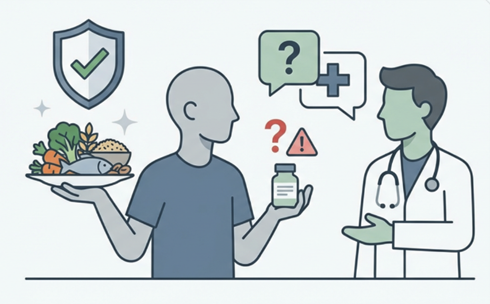
During cancer treatment, patients often consider supplementing with various health products, hoping to improve energy, reduce side effects, or boost immunity. However, recent research shows that health supplement use is actually quite widespread, but most patients do not discuss it with their medical team, which may bring potential risks. A 2024 open-access study found that the proportion of cancer patients using supplements is quite high, but their understanding of the efficacy and safety is limited, with information sources being inconsistent, increasing the chance of misuse. Therefore, health supplement use is not just a nutritional issue—it also involves treatment safety and efficacy, making it an important topic in cancer care that cannot be ignored [1].
The latest 2025–2026 research further clarifies this issue. A meta-analysis covering multiple randomized trials and systematic reviews indicated that the evidence quality for most nutritional supplements is low; only a few (such as specific amino acids or N-acetylcysteine) may be helpful for specific side effects. Most antioxidant supplements (such as vitamins C and E) have not been proven to improve prognosis during cancer treatment and may actually interfere with some treatment mechanisms that kill cancer cells through oxidative stress [2]. On the other hand, a 2025 prospective study published in Nutrition Journal showed that overall dietary antioxidant capacity is associated with cancer survival rates, but this effect comes from “overall dietary patterns” rather than individual supplements. Meanwhile, 2026 research also indicated that most commercially available supplements have not been proven to prevent cancer, and in some cases may even increase risks or interfere with treatment. This evidence is gradually forming a consensus: supplements are not ineffective, but must be used precisely [3].
Based on current evidence, the safer strategy for cancer patients is to center dietary habits on a balanced diet, such as consuming adequate protein, vegetables, fruits, and whole grains to support immune and repair functions. If there are specific nutritional deficiencies (such as vitamin D deficiency or insufficient protein), “precise supplementation” can be carried out under evaluation by a doctor or dietitian, rather than self-using multiple health products. Additionally, always proactively inform the medical team of all supplement use to avoid drug interactions. Overall, health supplements should be positioned as “auxiliary nutritional tools” rather than treatment means; using them based on evidence and under professional guidance is the key to enhancing quality of life without affecting the anti-cancer treatment course.
References
Kristoffersen, A. E., et al. (2024). Exploring dietary changes and supplement use among cancer patients in Norway: prevalence, motivations, disclosure, information, and perceived risks and benefits: a cross sectional study. BMC nutrition.
Huang, D. H., et al. (2025). Pre- and post-diagnosis dietary total antioxidant capacity and overall survival in patients with ovarian cancer: a prospective cohort study. Nutrition journal.
Benna-Doyle S, et al. (2026). The Efficacy and Safety of Nutritional Supplements for Cancer Supportive Care: An Umbrella Review and Hierarchical Evidence Synthesis. Integrative Cancer Therapies.