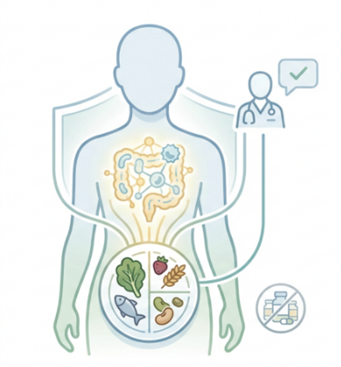
Immunotherapy has become an important treatment option for many cancers, but many patients often wonder during treatment: “What can I eat to help the treatment work?” Current evidence shows that diet not only affects physical strength and nutritional status but may also indirectly influence the immune system’s response through the gut microbiome. However, contrary to popular belief, there is no single “immune-boosting” food or supplement that can clearly enhance therapeutic efficacy. On the contrary, improper use of supplements or extreme diets may actually interfere with the immune response or increase side effects. Therefore, establishing correct dietary concepts is an indispensable aspect of immunotherapy [1].
Recent open-access research provides more specific direction. A study published in Nature Medicine indicated that gut microbiome diversity is closely related to immunotherapy response, and a high-fiber diet (such as vegetables, fruits, and whole grains) helps maintain a healthy microbiome environment, which may improve treatment response rates [2]. Another 2024 review study published in Nutrients emphasized that overall dietary patterns are more important than individual nutrients—for example, diets rich in plant-based foods and adequate protein help maintain immune function and reduce inflammatory responses [3]. Meanwhile, most studies do not support supplementing antioxidants or specific health products to enhance immunotherapy effects, and in some cases may even interfere with immune mechanisms.
Therefore, during immunotherapy, it is recommended to base dietary habits on a balanced diet, including diverse fruits and vegetables, whole grains, quality protein (such as fish, legumes, eggs), and adequate hydration to support overall immune and body repair functions. If loss of appetite or weight loss occurs, seek early evaluation from the medical team or a dietitian, and if necessary, use medical nutritional supplements rather than self-purchasing products marketed as “immune-boosting.” Additionally, avoid extreme diets (such as completely carbohydrate-free or overly restrictive diets), and proactively inform doctors of all supplement use to reduce potential risks. Overall, “eating balanced” is more important than “eating special”—adjusting diet under professional guidance is the key to supporting immunotherapy.
References
Nutrition During Cancer Treatment, 2024. National Cancer Institute.
Simpson RC, et al. (2022). Diet-driven microbial ecology underpins associations between cancer immunotherapy outcomes and the gut microbiome. Nature Medicine.
Muscaritoli M, et al. (2024). The impact of personalized dietary advice on cancer patients: A systematic review of current evidence. Nutrients.